
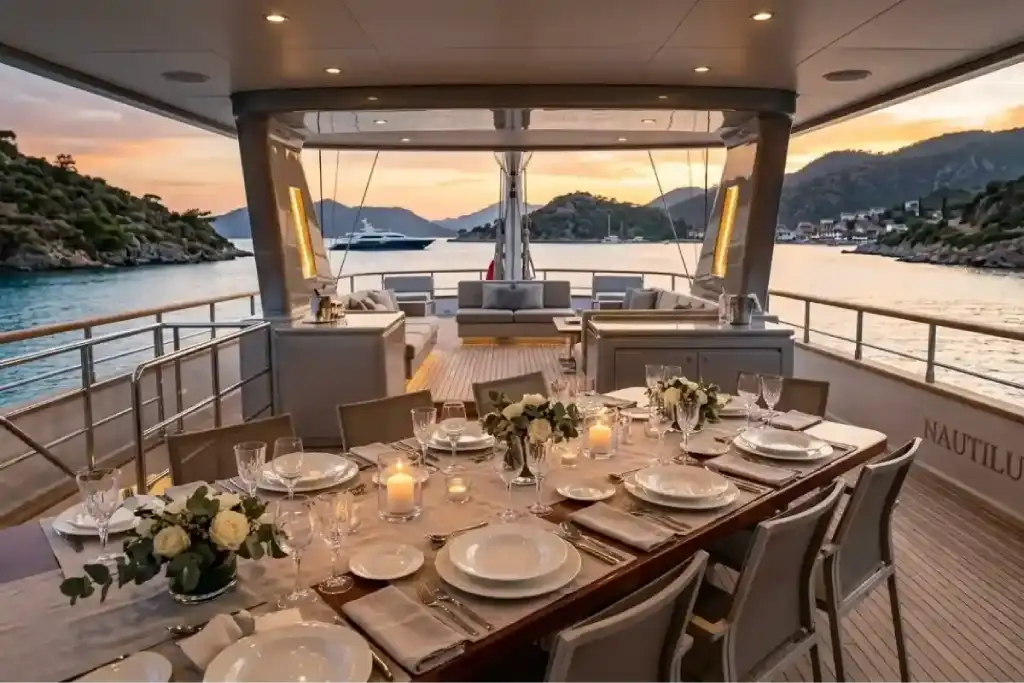
How to Accurately Compare Private Yacht Offers in Türkiye & Greece
Published by Ekmar Yachting · Expert Guidance for Luxury Yacht Charters
When planning a private yacht charter across the Aegean or Mediterranean, the weekly charter rate is naturally the first figure guests notice. However, the base charter fee is simply the starting point—not the final total for your week at sea.
Two yachts listed at identical base prices can result in different overall budgets once Value Added Tax (VAT), operational running costs, and customized services are calculated. Conversely, a vessel that appears more economical on paper may offer a different scope of inclusions or space than your group expects.
To ensure your charter calculation is completely transparent and free of unexpected costs, here is what you need to evaluate before making a final commitment.
7 Critical Questions to Ask Before Comparing Charter Offers
- Is VAT Included in the Quoted Rate?
VAT regulations and tax rates vary across maritime jurisdictions. Türkiye and Greece operate under distinct tax structures, and the applicable VAT often depends on the embarkation port, cruising boundaries, and flag state of the vessel. Some quotes include VAT, while others list it separately. Always clarify whether a quote is VAT-inclusive, which country’s tax rules apply, and the exact percentage charged. - Is APA (Advance Provisioning Allowance) Included, and What Does It Cover?
Bare charter rates rarely tell the whole financial story. Most luxury motor yachts operate under MYBA terms, where APA (typically 30–35% of the charter fee) covers fuel, food, beverages, port fees, and special requests. Conversely, many traditional Turkish gulets offer semi-inclusive rates or custom meal plans. Always ask if APA applies, what specific expenses it will cover during your chosen route, and how unspent balances are calculated and refunded at disembarkation. - What Port, Marina, and Transit Log Fees are Included?
Embarkation, disembarkation, and overnight mooring fees can vary substantially depending on your itinerary. Marina fees in high-profile island ports or private marinas are significantly higher than standard municipal quays. Furthermore, crossing international waters—such as navigating between Türkiye and the Greek Islands—requires specific transit logs, customs clearance fees, and international harbor duties. Verify which harbor and border-crossing fees are built into the base quote and which will be billed as extras. - What Fuel Allowance is Covered for Main Engines and Generators?
Fuel cost is one of the largest variables in any private charter. Some quotes include a fixed number of cruising hours per day (often 3 to 4 hours under main engines for gulets and motorsailers), while motor yachts almost exclusively charge fuel consumption separately based on actual engine hours and current market rates. Additionally, continuous generator use for air conditioning and onboard electronics consumes fuel. Clarify the exact fuel terms, daily cruising limits, and generator allowances before comparing prices. - What Marine Toys, Amenities, and Equipment are Included at No Extra Charge?
High-end water toys—such as Jet Skis, Seabobs, e-foils, and motorized tenders—can dramatically enhance your on-water experience, but they are not always free to use. Some charters include non-motorized equipment (paddleboards, kayaks, snorkeling gear) in the base price while charging daily rental or fuel usage fees for motorized water sports. Always request a detailed inventory of onboard amenities and confirm which toys carry additional usage fees or license requirements. - What is the Crew Composition, and How are Crew Gratuities Handled?
The quality of service on board depends entirely on the expertise and ratio of the crew. Inquire about the exact crew complement—including the captain, private chef, deckhands, and stewardesses—and their qualifications. Regarding pricing, crew gratuities are customary in the luxury charter industry but are almost never included in the base quote. Industry standards typically range from 10% to 15% of the base charter fee based on performance. Ensure you budget for this customary extra when evaluating competing offers. - What Are the Cancellation Policies, Payment Terms, and Rebooking Guarantees?
Flexibility and financial security are paramount when booking a private charter months in advance. Review the payment schedule—typically a 50% deposit upon contract signing with the balance due 30 to 60 days prior to embarkation. Compare the formal cancellation terms, force majeure clauses, and rebooking provisions across different brokers. Asking about charter insurance recommendations (such as cancellation or deposit protection) ensures your investment is protected against unexpected travel disruptions.
Why a Lower Headline Rate Can Be Deceptive
When comparing charter offers online, a lower base rate on paper does not always translate to a lower final invoice. Headline rates frequently omit mandatory costs that are added later in the booking process.
To evaluate charter offers on equal terms, your total budget calculation must always account for three primary elements:
- The Base Charter Fee: The core cost of renting the vessel, crew service, and vessel insurance.
- Applicable VAT: Mandatory local taxes (such as Türkiye’s 20% standard VAT) that must be clearly stated as included or excluded upfront.
- The Advance Provisioning Allowance (APA): The operating fund (typically 25% to 40% of the base fee) used exclusively for your group’s fuel, gourmet provisions, port fees, and customized requests.
A quote that leaves out VAT or understates operational APA requirements may appear thousands of Euros cheaper at first glance. However, once mandatory taxes and realistic running costs are calculated, that price gap vanishes. Evaluating a charter offer requires looking at the itemized total—not just the headline figure.
What a Transparent Quote Should Always Include
Operating under Ekmar Turizm Ticaret A.Ş. as a licensed Group A Travel Agency (TÜRSAB No: 2262), Ekmar Yachting operates on a principle of complete clarity. Every custom quote delivered clearly itemizes:
- The exact weekly charter fee and whether VAT is included (specifying the governing tax jurisdiction).
- The expected APA percentage (typically 25% to 40%) and precisely what expenses it covers.
- An explicit list of all included amenities, services, and potential extra charges.
- The formal charter contract framework applicable to the vessel (such as MYBA, TYBA, or standard owner agreements).
- Clear deposit schedules and cancellation terms.
If an expense exists, you are informed before confirming your reservation—never after. This approach allows you to evaluate private charter offers on equal terms and with total peace of mind.
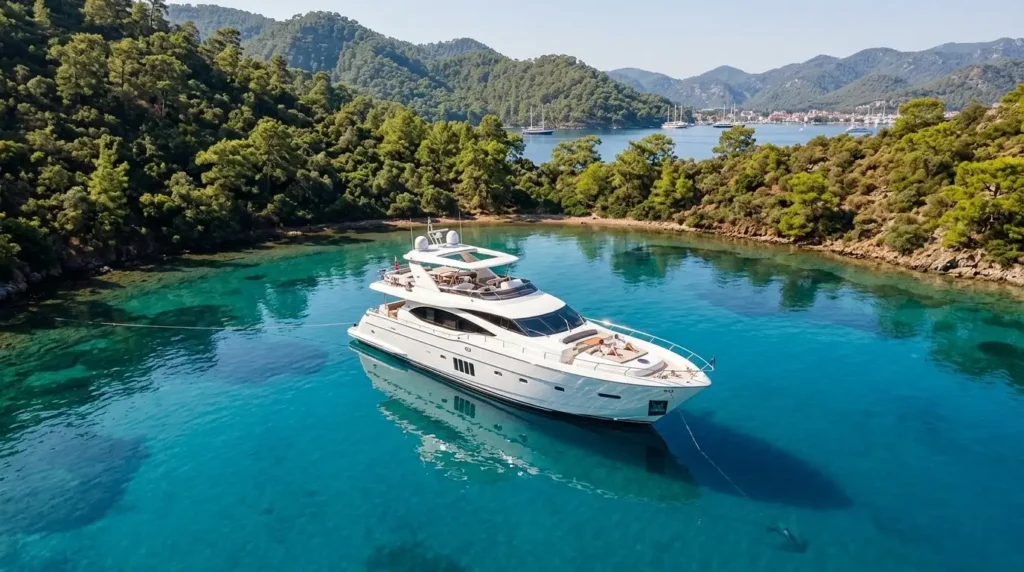
Partnering with an Established Brokerage
Ekmar Turizm has been a licensed TÜRSAB Group-A Travel Agency (Licence No. 2262) since 1992, with a maritime history arranging luxury yacht charters across Türkiye and Greece dating back to 1988.
Whether you are organizing a private family holiday or a corporate retreat, our team ensures every financial and logistical detail is handled with absolute professional standards.
Planning Your Next Charter?
Contact our brokerage team with your prospective travel dates, group size, and preferred cruising area. We will construct a fully itemized, transparent quotation tailored to your exact requirements.
- WhatsApp: +90 532 740 85 11
- Phone: +90 252 412 25 52
- Email: [email protected]
- Website: ekmaryachting.com
- Charter: charter.ekmaryachting.com